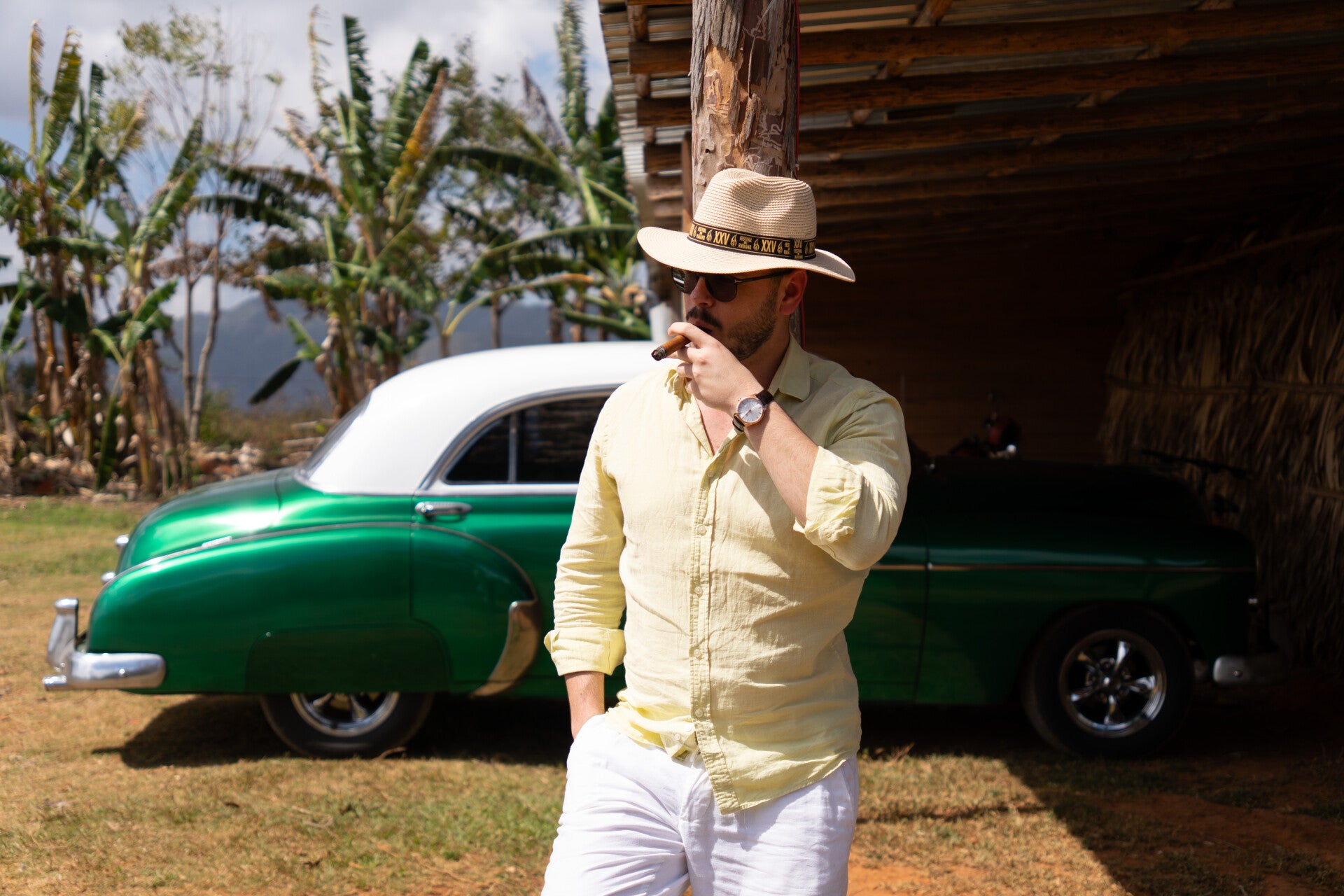
A Tribute to Cuba’s Tobacco Farmers, Vuelta Abajo, and a brand that honors them
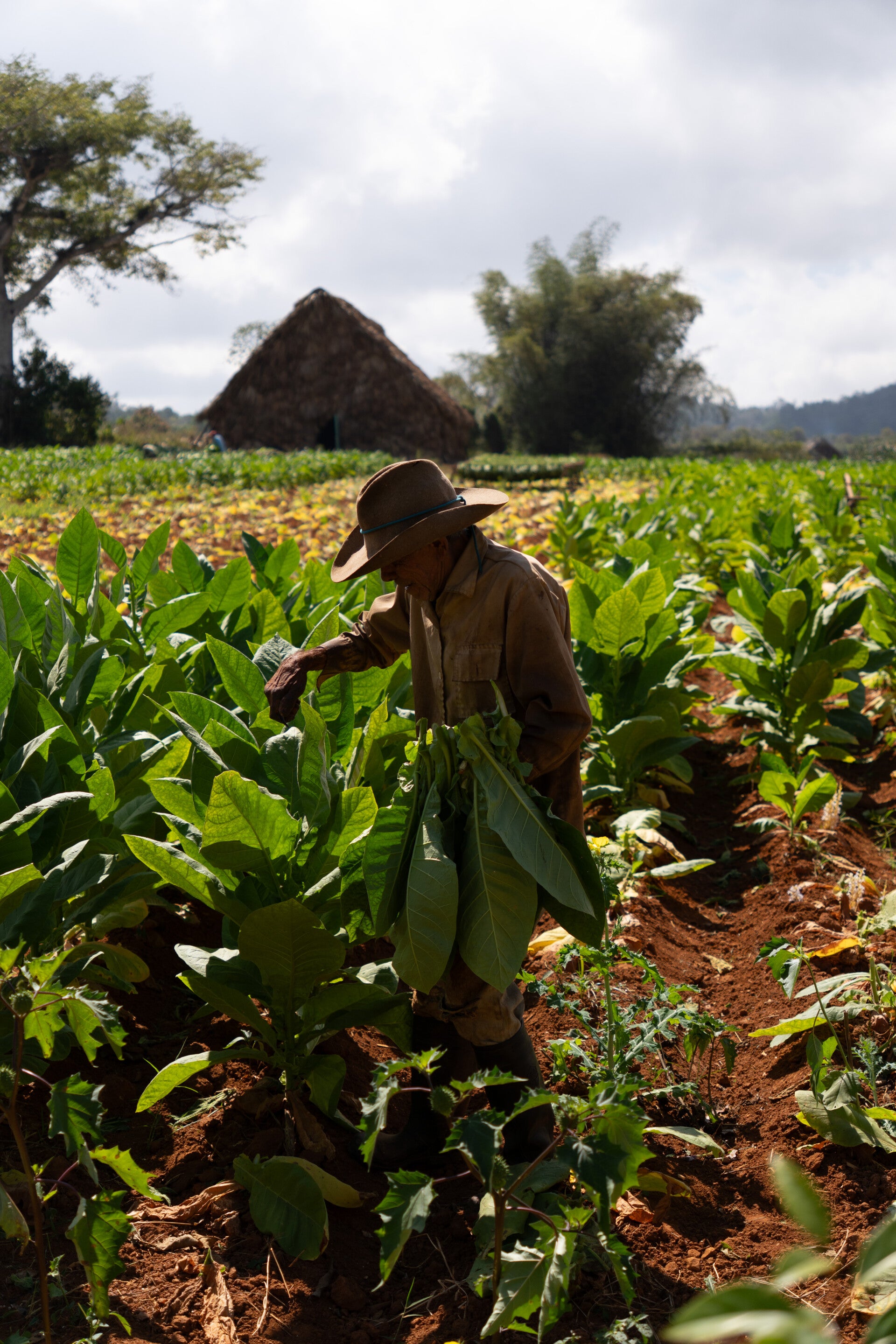
The first time a tobacco farmer placed a tobacco leaf in my hands was not during an official visit, nor as part of a carefully prepared demonstration for visitors. It happened in a quiet tobacco field in Vuelta Abajo, with the soil still damp from the morning dew and that deep, earthy aroma that exists only where tobacco destined for greatness is born.
The man was a *guajiro*.
And I use that word with the utmost respect, as it is used in Cuba: not as a simple description of a rural worker, but as a term that embodies wisdom, resilience, and an intimate connection with the land. A *guajiro* is a farmer, certainly, but also a guardian of tradition. His skin was weathered by the sun, his hands stained by the earth, and he carried the calm confidence of someone who understands that nature cannot be rushed.
He cut a leaf from the plant, held it out before me, and said: "Look at it carefully. Everything is here."
I expected a technical explanation, something about texture, oils, combustion, elasticity, veins, curing times. Instead, he simply repeated: "Everything is here."
And he was right. Within that leaf was the soil of Cuba, the patience of cultivation, the rain, the sun, the labor of generations, and the beginning of a masterpiece that, long before reaching an elegant humidor or the hands of an experienced smoker, starts in a furrow of fertile land. That day I understood something that has remained with me ever since: before it becomes smoke, before it becomes pleasure, before it becomes a symbol of luxury, a Habano is an act of agriculture. And the first artist of a Habano is not found in a cigar lounge or a factory. He is found in the tobacco field.

The Veguero: more than a farmer
The Spanish word *veguero* comes from *vega*, the fertile land where tobacco is cultivated. Yet in Cuba, the meaning of the word has grown far beyond its literal definition.
A veguero is not simply someone who grows tobacco. He is someone who understands it. Someone who observes it, nurtures it, and accompanies it from seed to leaf. He reads the sky, the humidity, the texture of the soil, and the subtle signs that reveal the health and future of every plant.
In Vuelta Abajo, in the province of Pinar del Río, the figure of the veguero reaches almost mythical status. There, in the region universally recognized as producing the finest tobacco in the world, tobacco cultivation is not merely a profession, it is a way of life passed from one generation to the next.
Every task has meaning. Preparing the soil. Sowing. Transplanting. Removing flower buds. Selecting leaves. Harvesting. Stringing leaves for curing. Monitoring humidity. Each stage demands experience, judgment, and dedication.
The greatness of Cuban tobacco cannot be explained solely by climate and soil, however exceptional they may be. It must also be explained by the men and women who cultivate it. The land may be extraordinary, but without the skill and sensitivity of the veguero, greatness would never emerge.
To understand the Cuban veguero, one must also look across the Atlantic to the Canary Islands.
For centuries, Canary Islanders migrated to Cuba in significant numbers, bringing with them agricultural knowledge, discipline, and a deeply rooted farming culture. Many settled in western Cuba, where tobacco cultivation offered opportunity and purpose.
The modern Cuban tobacco farmer emerged from the blending of these influences: the native Cuban countryside, the resilience of the Canary Island settlers, and the fertile lands of Pinar del Río.
The contribution of the Canary Islanders went far beyond labor. They brought family farming traditions, cultivation techniques, and a profound respect for the land. Their influence became an integral part of Cuba’s tobacco culture.
The history of Cuban tobacco is therefore not only a story of soil and climate. It is also a story of migration, adaptation, and the transmission of agricultural wisdom across generations.
The Tobacco Field: Where Luxury Truly Begins
When people smoke a Habano, they often think of the brand, the vitola, the factory, the packaging, or the pairing.
Yet before all of those things comes the tobacco field.
The tobacco plant demands constant attention. It is noble but demanding. It requires observation, care, protection, and experience. Each leaf develops differently according to its position on the plant.
This is why the language of tobacco is filled with terms referring directly to the structure of the plant itself. Every leaf has a purpose. Every position has a role. The final blend of a Habano is not created by chance—it is built upon the architecture of the tobacco plant.
The roller may create the cigar, but the veguero creates its foundation.
Vegueros: a brand born as a Tribute
In 1996, Habanos S.A. introduced the Vegueros brand.
Unlike many cigar brands that honor aristocrats, historical figures, or literary characters, Vegueros was created specifically to pay tribute to the tobacco farmers of Pinar del Río. That fact alone makes it unique.
Vegueros is a deeply Cuban brand. Its name does not celebrate luxury from a distance; it celebrates origin. It directs attention away from the cigar lounge and back toward the tobacco field. For generations, farmers in Vuelta Abajo rolled cigars for their own enjoyment using tobacco grown on their land. Visitors to the region often sought out these rustic cigars, fascinated by the opportunity to smoke tobacco directly from its birthplace.
Vegueros was created to embody that spirit: the cigar of the countryside, the cigar of origin, the cigar that carries the name of the people who make the Habano possible.

Francisco Donatién Factory
Vegueros cigars are produced at the Francisco Donatién Factory in Pinar del Río. This is more than a logistical detail. The factory stands in the very province that represents the heartland of Cuban tobacco cultivation. Its location reinforces the brand’s authenticity and purpose. Vegueros is not simply inspired by tobacco farmers. It remains physically connected to the land and community it was created to honor.
Following a significant relaunch, Vegueros adopted a contemporary image while preserving its identity. Its portfolio includes vitolas whose names evoke the language of tobacco cultivation and the structure of the tobacco plant itself.
Mañanitas: 46 ring gauge x 100 mm. A compact format whose name evokes the smallest leaves on the tobacco plant. They are located at the lower part of the plant and are the first leaves to be harvested..
Entretiempos: 52 ring gauge x 110 mm. Delivers a balanced and flavorful smoking experience in a modern format.
Tapados: 46 ring gauge x 120 mm. The name refers to *tabaco tapado*, tobacco grown under cheesecloth shade to produce delicate wrapper leaves with greater elasticity and refinement.
Centrofinos: 50 ring gauge x 130 mm. This vitola holds special significance for me. When I completed my thesis as a Habanos Sommelier, I selected the Vegueros Centrofinos as my subject. It was not a casual choice. The name itself connects directly to the tobacco plant and to the agricultural foundations of the Habano. Choosing Centrofinos meant choosing to tell the story not only of a cigar, but of a culture.
Centrogordos: 54 ring gauge x 100 mm. A more recent addition to the portfolio, reflecting contemporary preferences for shorter, thicker formats while maintaining the brand’s connection to the terminology of tobacco cultivation.
The Band: a symbolic design
Some observers fail to appreciate the symbolism behind the Vegueros cigar band. For me, it is not merely attractive. it is meaningful. The prominent “V” can represent victory, *vega* (the tobacco field), vitality, and the green landscapes of Cuba’s tobacco-growing regions. The color green evokes both hope and the fertile fields of Vuelta Abajo. Unlike brands that rely heavily on gold embellishments and aristocratic imagery, Vegueros finds its elegance in authenticity. Its luxury lies in its roots.
Why Vegueros matters to me
My relationship with Vegueros is not purely technical. It is deeply personal. When I selected a Vegueros Centrofinos for my Habanos Sommelier thesis, I was making a statement. I could have chosen a more famous brand or a more prestigious vitola. Instead, I chose a cigar that directed attention toward the beginning of the story rather than its conclusion. The Habano should not only be understood through prestige. It should be understood through origin. And few brands speak of origin as eloquently as Vegueros.
Add comment
Comments