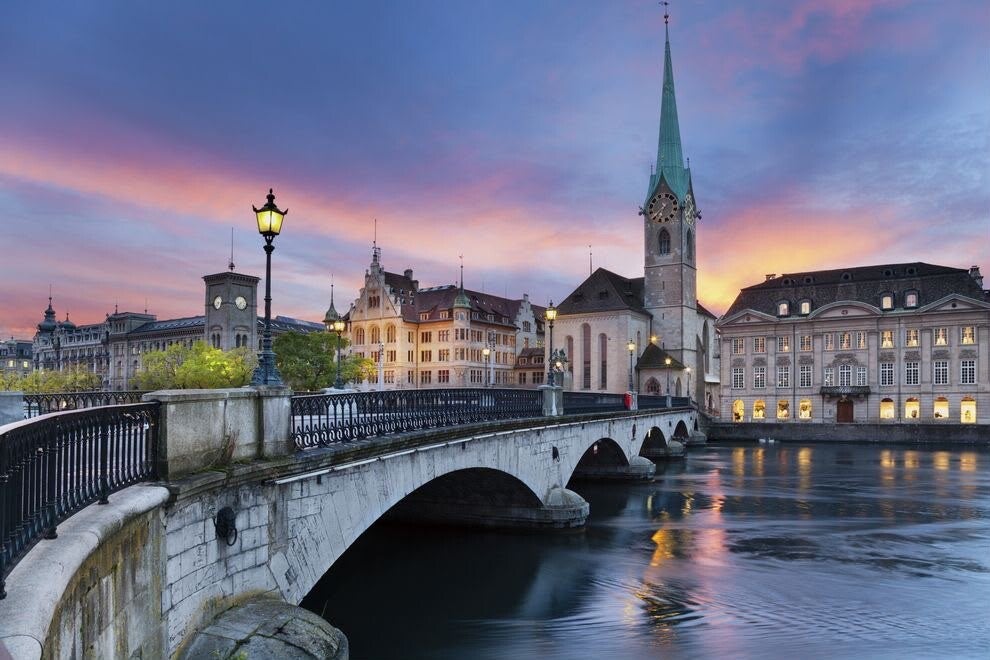
Switzerland occupies an exceptional place on the global map of Habanos. It is not a producer of Cuban tobacco, yet it remains one of the most influential, sophisticated, and stable historical markets for Cuban cigars. Its importance is not explained merely by volume, but rather by value, luxury culture, collecting traditions, premium hospitality, technical preservation, and a highly specialized network of distribution and consumption that has transformed the Habano into part of a uniquely Swiss sensibility: one centered on slow pleasure, precision, and careful preservation.
In 2024, Habanos S.A. reported record revenues of $827 million, with Switzerland ranking among its most important markets by revenue, alongside China, Spain, the United Kingdom, and Germany. This confirms an essential reality: Switzerland may be small in population, but it carries enormous weight within the world of premium Cuban cigars. It represents a culture of consumption in which the Habano is not viewed as a mass-market product, but as an object of luxury, contemplation, conversation, gastronomy, and collecting.
General tobacco consumption in Switzerland has declined in recent years. In 2022, 24% of the population over the age of fifteen smoked, three percentage points fewer than in 2017. The Habano, however, belongs to an entirely different category. It is not an everyday product comparable to cigarettes, but rather a selective and niche ritual associated with specialized tobacconists, cigar lounges, pairing dinners, collecting, and highly knowledgeable aficionados. In this sense, Switzerland demonstrates that the importance of a Habano market is not always measured by the number of smokers, but by cultural depth, purchasing power, and loyalty to the product.
The central actor in the modern distribution of Habanos in Switzerland is Intertabak AG, founded in 1995 and headquartered in Pratteln, near Basel. Intertabak serves as the official importer and exclusive distributor of Habanos for Switzerland and the Principality of Liechtenstein. In 2019, Habanos S.A. reported that the Swiss market included three Casas del Habano, twenty Habanos Specialists, seventy Habanos Points, twelve Habanos Lounges & Terraces, and a total of 335 specialized points of sale.
This structure reveals the extraordinary density of Habano culture in Switzerland: a relatively small network compared with major consumer markets, yet one that is exceptionally qualified, organized, and oriented toward luxury.

Zino Davidoff: The Great Cultural Architect of the Premium Cigar in Switzerland
Born in Kyiv in 1906, Zino Davidoff later settled in Geneva with his family. His father, Henri Davidoff, opened a tobacco shop in the city in 1911, a business that would eventually become one of the most influential establishments in modern cigar history. Zino was far more than a merchant; he was an educator of taste, an ambassador of premium tobacco, and one of the first great European interpreters of the Habano as an expression of culture, time, and refinement.
As a young man, he traveled throughout Latin America to study tobacco at its source. His time in Cuba proved decisive. There he became acquainted with plantations, factories, fermentation processes, tobacco selection, rolling techniques, and aging methods. This experience allowed him to understand that the Cuban cigar was not merely a prestigious commodity, but the result of a complex chain involving soil, climate, seed, cultivation, curing, fermentation, craftsmanship, and preservation.
Upon returning to Geneva, he applied this knowledge to an entirely new way of selling, preserving, and explaining cigars.
One of Davidoff’s most important contributions was the introduction of a rigorous culture of cigar preservation. He understood that Cuban cigars, originating in a tropical climate, required stable humidity and temperature conditions to maintain their organoleptic qualities. His famous climate-controlled cigar cellar in Geneva became a landmark innovation in the European premium cigar trade.
What today seems obvious: humidors, humidity control, careful storage, resting periods, stock rotation, and tobacco protection, was part of a mindset that Davidoff helped establish first in Switzerland and later throughout Europe.
Yet his greatest influence was cultural.
Zino Davidoff taught people to smoke with respect. He taught that a cigar should not be consumed in haste, but rather appreciated as a deliberate pause. He associated the cigar with the art of living, conversation, gastronomy, wine, travel, and understated elegance.
In this regard, Switzerland found in Davidoff a figure perfectly aligned with its own sensibilities: precision, discretion, artisanal excellence, time, and luxury without ostentation.
The Cuban Davidoff: When Switzerland’s Most Famous Cigar Brand Was Made in Cuba
The relationship between Davidoff and Cuba reached its pinnacle with the production of Davidoff cigars on the island. For decades, Cuban-made Davidoff cigars were regarded among the most prestigious cigars in the world. Their significance was not merely commercial but deeply symbolic: they represented the union of Cuban tobacco excellence and the Swiss interpretation of luxury.
The Cuban Davidoff portfolio included vitolas that today are considered legendary among collectors, such as the Davidoff No. 1, Davidoff No. 2, Ambassadrice, Château Latour, Château Margaux, Château Lafite, Château Haut-Brion, Château Yquem, Château Mouton Rothschild, and Dom Pérignon.

The Château Series established an intellectual bridge between the worlds of wine and cigars. The names were not chosen by chance. By invoking some of France’s most celebrated wine estates, Davidoff was effectively transferring to the Habano the language of terroir, aging, vintage character, aromatic complexity, and contemplative tasting.
This parallel was revolutionary.
Before Davidoff, many European consumers appreciated cigars primarily as symbols of prestige and status. Davidoff helped transform the cigar into an object of sensory analysis. Cigars began to be discussed in terms of body, strength, evolution, persistence, balance, texture, aromatic complexity, and maturity. This way of understanding the Habano profoundly influenced Swiss premium cigar culture.
The Cuban Davidoffs were crafted entirely from Cuban tobacco and were associated with the highest standards of selection, presentation, and quality control. Over time, and particularly after their disappearance from Cuban production, they became highly sought-after collector’s items. Today, cigars such as the Davidoff Dom Pérignon and the Cuban Château Series occupy a near-mythical place within the world of cigar collecting.
The separation between Davidoff and Cuba occurred during the late 1980s and early 1990s amid disagreements concerning consistency, draw, combustion, and quality standards. Cuban production of Davidoff cigars was eventually discontinued, and manufacturing was transferred to the Dominican Republic.
Yet this decision did not erase Davidoff’s Cuban legacy. On the contrary, it elevated it into legend.
The Cuban-made Davidoffs remain enduring symbols of a unique era in which Switzerland and Cuba shared a common vision of excellence.
The influence of Zino Davidoff remains visible throughout Switzerland even decades after the separation between Davidoff and Cuba.
His legacy can be seen in the way Swiss cigar enthusiasts approach the cigar experience: with respect for preservation, attention to service, curiosity about origin, appreciation for pairing, and an understanding that time itself forms an essential part of the enjoyment.
Whenever a Casa del Habano in Switzerland hosts a tasting, whenever an aficionado stores a box for years awaiting its ideal maturity, whenever a cigar sommelier discusses the evolution of flavors through the thirds, or whenever a lounge presents Habanos alongside wine, spirits, coffee, or fine cuisine, there is an intellectual imprint that inevitably leads back to Davidoff.
Switzerland did not merely purchase Habanos, it learned how to explain them, preserve them, and transform them into culture.
In that transformation, Zino Davidoff remains a foundational figure.
Heinrich Villiger and the Swiss Continuity of Tobacco
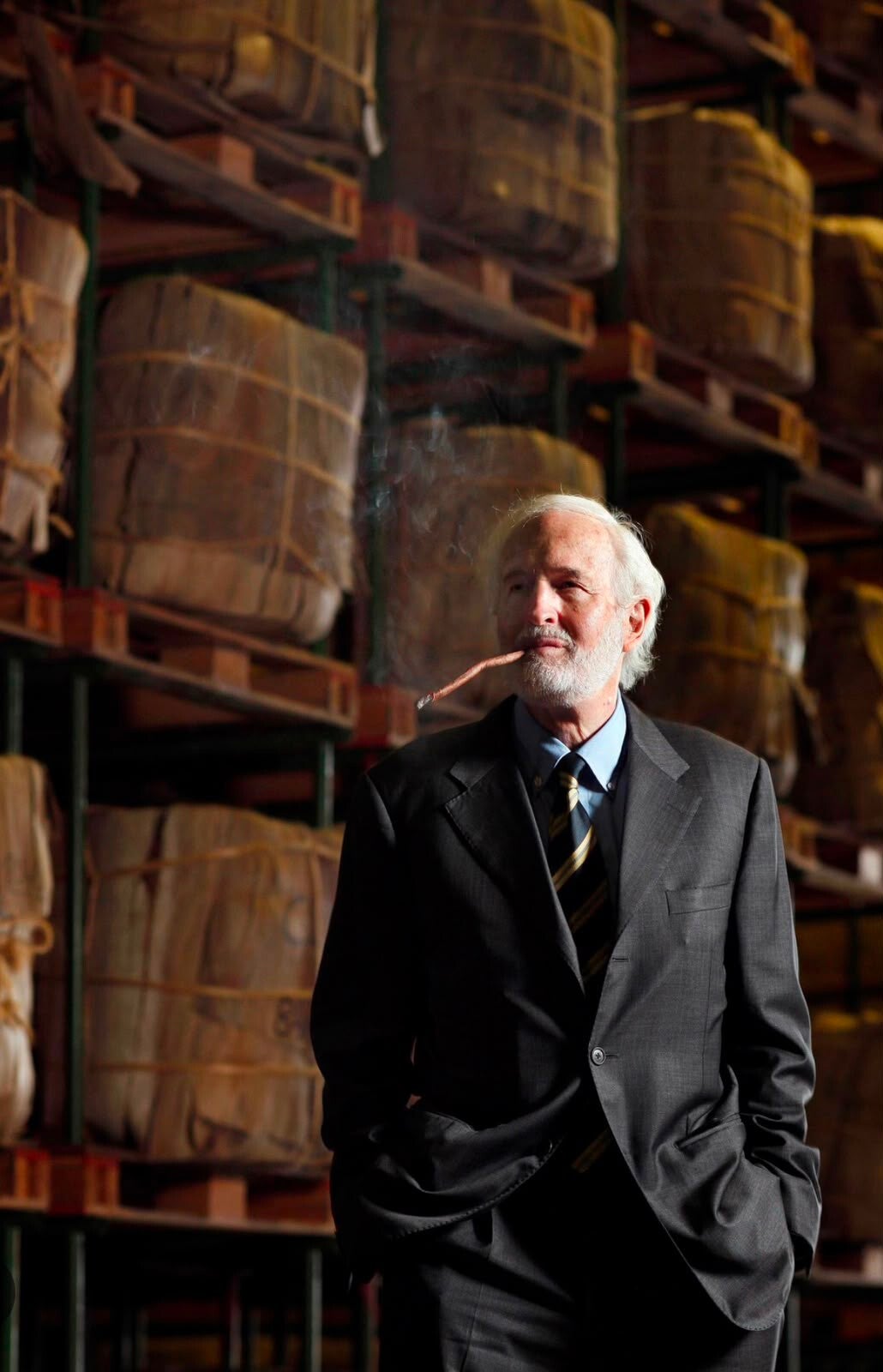
Alongside Zino Davidoff, another essential figure in Swiss cigar history is Heinrich Villiger.
For decades, he was among the most respected tobacco entrepreneurs in Europe and around the world. As owner of Villiger Söhne AG, he embodied a vision grounded in family continuity, technical expertise, commercial integrity, and respect for tradition.
Heinrich Villiger passed away on July 25, 2025, at the age of ninety-five, after spending seventy-five years working within the family business. His influence within the cigar world was immense.
Under his leadership, Villiger evolved into a truly international company, while he himself maintained close ties to the Cuban cigar industry. He remained a familiar presence within the world of Habanos, particularly through his long-standing relationships with the industry and his regular participation in prestigious events such as the Festival del Habano.
Villiger represents a dimension distinct from Davidoff.
If Davidoff was the philosopher of the premium cigar and the great educator of taste, Villiger was the architect of continuity, distribution, and international presence.
Together, though from different perspectives, they helped establish Switzerland as one of the most influential nations in the modern history of premium tobacco.
Switzerland and the Birth of the Regional Edition Concept
The relationship between Switzerland and Cuba gained particular significance with the creation of the Regional Editions program.
According to industry tradition, in 2004 Urs Tanner, then Managing Director of Intertabak, presented Habanos S.A. with a request from a Geneva tobacconist seeking a personalized Havana cigar. Although the specific proposal was declined, the underlying concept inspired the creation of exclusive cigars tailored to individual markets.
From this idea emerged the Regional Editions program, which has since become one of the most important and collectible categories within the Habano universe.
Switzerland was a natural environment for such a concept, it combined a relatively small market size with high purchasing power, a strong collecting culture, an appreciation for exclusivity, and a highly specialized retail network capable of presenting these releases with the prestige and ceremony they deserved. As a result, Switzerland became one of the most important countries in the history of Regional Editions, producing some of the most desirable and respected releases ever issued under the program.
The Swiss market quickly demonstrated that exclusivity alone was not enough. What truly distinguished these cigars was the way they were introduced, explained, presented, and preserved. In Switzerland, a Regional Edition was not simply a limited-release cigar, it became a cultural event.
The Swiss Regional Editions represent one of the most fascinating chapters in contemporary Habano collecting. Since the launch of the Regional Editions program, Switzerland has consistently demonstrated its ability to select formats, brands, and presentations that appeal to seasoned collectors and discerning aficionados alike.
Among these releases, the 2018 La Gloria Cubana Orgullosos stands out as one of the most admired. Produced in the prestigious 109 format and limited to just 6,000 boxes of 10 cigars, it paid tribute to the pride and craftsmanship of Cuban torcedores. The 109 format itself is considered one of the most challenging shapes to produce due to its distinctive head and construction requirements, making it particularly appreciated among collectors.
Another landmark release was the 2020 Quai d’Orsay Sélection Royale, created to celebrate the twenty-fifth anniversary of Intertabak. It was the first Swiss Regional Edition ever produced under the Quai d’Orsay marque and was released in the elegant 109 format, with only 1,600 boxes of 50 cigars.
Its selection was especially meaningful. Quai d’Orsay, with its refined character and diplomatic heritage, aligns naturally with Swiss preferences for understated elegance, sophistication, and balance.
A more recent highlight is Diplomáticos El Emisario, the Swiss Regional Edition 2021, which finally reached the market in February 2024. Measuring 141 mm in length with a 50-ring gauge, it debuted at a retail price of 38 CHF per cigar and was produced in a limited run of 15,000 numbered boxes of ten cigars. It quickly became one of the most discussed Swiss Regional Editions of recent years.
Swiss Habanos Day: A Celebration of Culture
Few events illustrate the Swiss relationship with Habanos better than Swiss Habanos Day.
The third edition, held on October 28, 2017, near Zurich, brought together more than 210 aficionados, industry professionals, and collectors. The event featured educational workshops, rum and cocktail pairings, Cuban music, a themed gala dinner, a charity auction, and the official launch of the Sancho Panza Valientes Swiss Regional Edition 2017.
Events such as these demonstrate that Switzerland views the Habano as a complete cultural experience.
The focus extends far beyond smoking. It encompasses learning, sharing, collecting, pairing, discussing, and celebrating the Cuban origins of the product. There is an almost ceremonial quality to the Swiss Habano experience: precision in service, meticulous preservation, attention to presentation, and a profound respect for the occasion.
Another milestone occurred on July 12, 2019, when Zurich hosted the world premiere of the Punch Short de Punch.
Although not a Regional Edition, the launch was entrusted exclusively to the Swiss market before its broader international release. Approximately 250 guests attended the event. The cigar introduced a 50-ring gauge to Punch's regular portfolio and once again demonstrated Habanos S.A.'s confidence in Switzerland as a premier stage for important global launches.
The Vault Habanos: Switzerland's Time Capsule of Tobacco
In recent years, Intertabak opened a new chapter in Swiss cigar culture through The Vault Habanos.
The concept is elegantly simple yet profoundly significant.
Exceptional Habanos are carefully selected, preserved for extended periods under ideal conditions, and only released once they have reached a superior stage of maturity.
The idea is perfectly aligned with Swiss values.
Switzerland has long understood that time is one of the Habano's most important invisible ingredients.


When properly stored, a cigar can soften its rough edges, integrate its essential oils, harmonize its aromatic compounds, and evolve from a powerful smoking experience into one of greater elegance and complexity.
However, not every cigar benefits equally from aging. Success depends on careful selection, traceability, and impeccable storage conditions.
The Vault therefore offers far more than old cigars. It offers memory. It offers patience. It offers authenticity. And above all, it offers preservation.
Each box maintains its seals, provenance, references, and historical integrity, allowing every Habano to retain its story—from the tobacco fields of Vuelta Abajo to the Cuban factory where it was rolled, from its original shipment to the Swiss vault where time completed its silent work.
Switzerland as a Laboratory of Collecting and Quiet Luxury
The history of Habanos in Switzerland cannot be understood solely through the lens of distribution. It is fundamentally a story of culture.
Switzerland has functioned as a laboratory for cigar collecting, regional exclusivity, technical preservation, and specialized events. While other markets may distinguish themselves through volume or spectacle, Switzerland stands apart through restraint, precision, and respect. Within the Habano universe, those qualities carry tremendous value. A great cigar requires more than exceptional tobacco. It requires proper conditions, knowledge, patience, context, and a consumer capable of appreciating its nuances. Switzerland has consistently provided all of these elements. Zino Davidoff taught Europe that cigars could be culture. Heinrich Villiger demonstrated that tobacco could be sustained through continuity, professionalism, and long-term vision. Intertabak built a modern infrastructure for Habanos in Switzerland and Liechtenstein. The Regional Editions transformed the country into one of the world's great centers of cigar collecting. And The Vault Habanos elevated that tradition into the realm of aging, memory, and historical preservation.
The history of Habanos in Switzerland is far more than the story of an importing nation. It is the story of a country that helped shape and define the modern culture of the premium cigar.
For more than a century, Switzerland has served as a meeting point where Cuban tobacco tradition intersects with Swiss precision, discretion, and craftsmanship. It has been a center of preservation, education, distribution, collecting, and refinement, helping transform the Habano from a luxury commodity into a cultural experience.
Few countries have contributed so profoundly to the intellectual and sensory appreciation of the cigar.
Through the pioneering vision of Zino Davidoff, Switzerland learned not merely to sell cigars, but to understand them. Davidoff introduced generations of enthusiasts to the importance of proper storage, patient aging, thoughtful pairing, and the notion that a cigar should be appreciated as an expression of time, place, and craftsmanship. His influence permanently altered the way premium cigars are perceived throughout Europe and beyond.
Through the entrepreneurial continuity of Heinrich Villiger, Switzerland demonstrated how tobacco traditions could be sustained through technical expertise, family stewardship, and long-term commitment. His work helped strengthen the country's reputation as one of the most respected centers of the global cigar industry.
Switzerland developed one of the most sophisticated distribution networks in the world, ensuring that Cuban cigars would be presented, preserved, and appreciated under optimal conditions. Through the Regional Editions program, the country became a benchmark for exclusivity and collecting, producing some of the most sought-after limited editions ever released by Habanos S.A.
In a world where Habanos have become increasingly scarce, valuable, and coveted, Switzerland continues to represent one of their most refined homes. Small in territory yet immense in influence, the country remains a place where cigars are not merely smoked, but preserved, studied, celebrated, and remembered.
This is why the Swiss chapter of Habano history remains so important.
It reminds us that a great cigar does not belong solely to the moment in which it is smoked. It also belongs to the years that shaped the tobacco, the hands that rolled it, the cellar that protected it, the aficionado who patiently awaited its maturity, and the culture that ultimately gave meaning to the experience.
In Switzerland, the Habano found more than a market. It found a language capable of understanding it.
And in doing so, Switzerland secured a permanent place in the history of the world's finest cigars.
Add comment
Comments